Electrode Puzzle Logic Game
Reviews
💡EG Electrode is a well-designed logic puzzle that is easy to pick up but offers plenty of depth. The no-overlap rule creates interesting spatial challenges. Levels start simple and become more complex, providing good replay value as you try to improve your solutions. It is a safe, free, and relaxing way to exercise your brain.
Description
Game Introduction
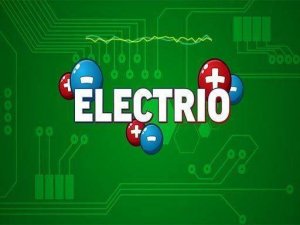
EG Electrode is a logic puzzle game that challenges you to connect positive and negative charges on a grid. The core objective is to pair each electron with its opposite charge by drawing a line between them, without any lines crossing or overlapping. What makes this game unique is its blend of simple rules and increasingly complex spatial reasoning. Starting with small grids, each level requires careful planning to avoid intersections. The clean, minimal design keeps the focus on the puzzle itself, making it a calm yet engaging mental exercise suitable for all ages.
How to Play
Players typically start by clicking or tapping on an electron to begin a connection. Then, they drag to an electron of the opposite charge to complete the link. The goal is to connect all pairs on the grid to finish the level. If a line would cross another existing line, the game prevents the connection, so you must plan your path carefully. There are no timers or penalties for wrong moves, allowing you to experiment freely. Each completed level unlocks the next challenge, and you can replay any level to try for a more efficient solution.
Game Features
Features include progressively harder levels that test logic and planning. The graphics are clean and distraction-free, making them easy on the eyes. There are no time limits, allowing relaxed play at your own pace. The content is family-friendly with no violence or inappropriate themes. The game is completely free to play online without any downloads or registration. Replayability is enhanced through optional optimization of your solutions.
Tips for Success
To succeed, start by scanning the entire grid before making any connections. Look for pairs that are isolated or have clear paths, as these are easier to link first. Plan your route in advance, especially for pairs that are surrounded by other electrons. If you get stuck, try a different order of connections—sometimes the solution requires a specific sequence. Practice regularly to improve your spatial reasoning and pattern recognition. Remember, there is no time pressure, so take your time to think through each move carefully.
Compatibility:
✅ Works on PC & Mobile | Recommended: Chrome / Safari / Edge